25 Oct 2026
Material Science Breakthroughs Shaping Modern Wire Management Practices
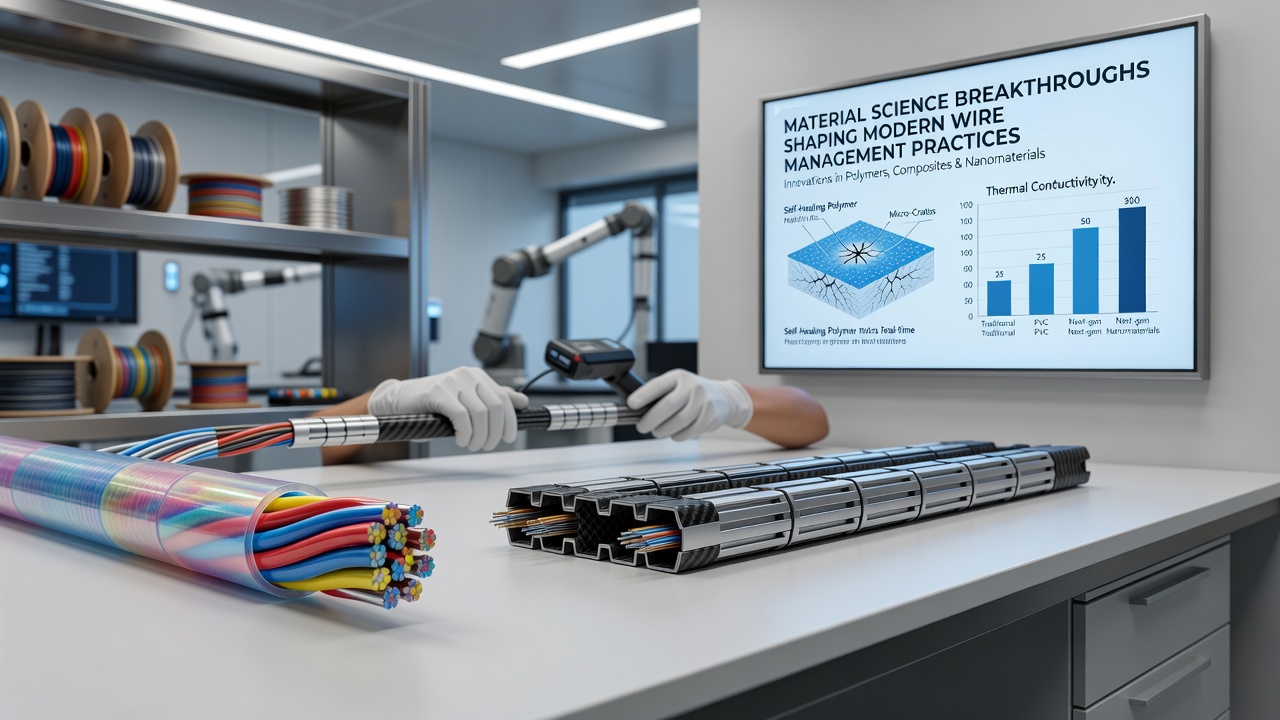
Material science continues to drive changes in how cables and wires get organized, protected, and maintained across industries, and recent developments focus on polymers, nanomaterials, and sustainable compounds that address heat, electromagnetic interference, and mechanical stress at once. Researchers at multiple institutions have documented performance gains in tensile strength and thermal resistance when new formulations replace traditional PVC or rubber sheathing, while data from testing facilities show reduced failure rates in high-density installations.
Polymer Innovations Improve Cable Flexibility and Longevity
Cross-linked polyethylene compounds now incorporate additives that allow cables to bend repeatedly without cracking, and these materials maintain integrity under temperatures reaching 150 degrees Celsius according to laboratory benchmarks. Engineers have paired these polymers with low-smoke zero-halogen jackets that limit toxic emissions during fires, a requirement enforced in building codes across the European Union and parts of North America. Studies conducted at the Fraunhofer Institute for Applied Polymer Research indicate that such jackets extend service life by factors of two to three compared with earlier generations, which reduces replacement frequency in commercial data centers and industrial plants alike.
Thermoplastic elastomers have entered wire management applications where vibration resistance matters most, such as automotive harnesses and aerospace assemblies. These elastomers absorb mechanical shock through molecular structures that return to original shape after deformation, and manufacturers report measurable drops in abrasion damage when routing bundles through tight spaces. In October 2026 the Materials Research Society meeting featured presentations on hybrid polymer blends that combine flame retardancy with improved dielectric properties, allowing thinner insulation layers without sacrificing safety margins.
Nanomaterials Strengthen Conductors and Reduce Bulk
Carbon nanotube coatings applied to copper conductors increase current-carrying capacity while lowering overall weight, and pilot projects in power distribution networks demonstrate stable operation at higher amperages without additional cooling infrastructure. Researchers note that the nanotubes form continuous pathways that mitigate electromigration, a common failure mode in high-load environments. Graphene-infused tapes wrapped around cable bundles provide electromagnetic shielding that outperforms traditional braided copper in frequency ranges above 1 GHz, which matters for 5G infrastructure and high-speed computing racks.
One study released by the U.S. Department of Energy examined nanotube-reinforced sheathing in underground conduit systems and recorded a 40 percent reduction in signal attenuation over multi-year test periods. These findings align with observations from utility operators who track performance metrics in smart-grid deployments, where consistent data transmission depends on minimal interference from surrounding equipment.
Sustainable Materials Enter Commercial Wire Management
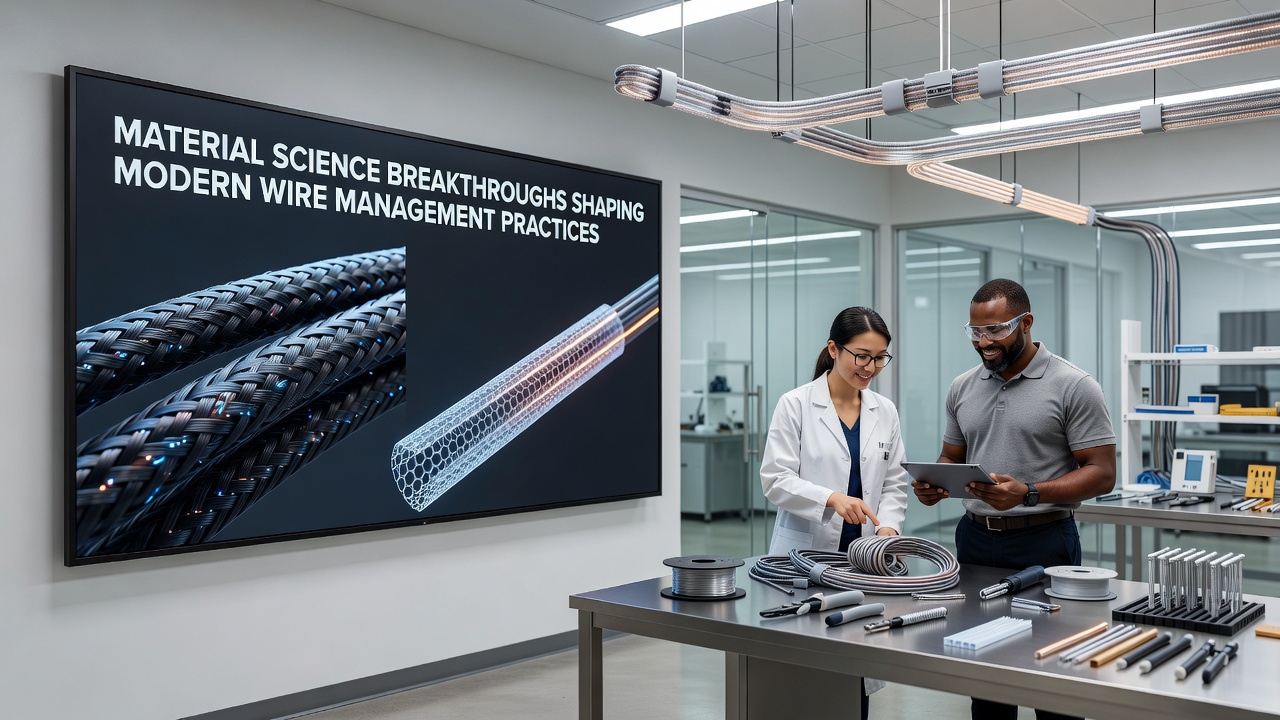
Bio-based polymers derived from plant oils and agricultural waste now appear in cable jackets that meet UL and IEC flammability standards, and lifecycle analyses published by academic groups show lower carbon footprints during production compared with petroleum-derived alternatives. Recycled-content compounds have reached mechanical performance levels that satisfy industrial specifications, allowing manufacturers to incorporate post-consumer plastics without compromising tensile or impact ratings. European Commission directives on circular economy practices encourage adoption of these materials in public infrastructure projects, and several large-scale installations completed in 2025 used jackets containing at least 30 percent recycled polymer.
Phase-change materials integrated into cable trays absorb and release heat during load fluctuations, which stabilizes temperatures in enclosed spaces where airflow remains limited. Tests at Canadian research facilities confirmed that trays lined with microencapsulated paraffin compounds maintained internal temperatures 12 degrees lower than conventional metal trays under identical electrical loads, extending the operational window for sensitive network hardware.
Self-Healing and Smart Coatings Add Resilience
Microcapsule-based self-healing polymers release sealing agents when surface damage occurs, and accelerated aging trials reveal that healed sections retain more than 85 percent of original dielectric strength. These coatings find use in outdoor and marine environments where abrasion and UV exposure accelerate wear. Embedded sensors printed with conductive inks monitor strain and temperature along cable runs, transmitting data wirelessly to central management systems that flag potential issues before failures occur.
Industry reports from the Institute of Electrical and Electronics Engineers document deployments in which sensor-equipped cables reduced unplanned downtime by identifying hot spots in real time, allowing targeted maintenance rather than full system shutdowns. Such capabilities integrate directly with building management platforms that already track power consumption and environmental conditions.
Conclusion
Advances in polymer chemistry, nanomaterial integration, and sustainable formulations continue to reshape wire management by delivering cables that last longer, perform under greater stress, and align with regulatory expectations for safety and environmental impact. Data from government laboratories, academic consortia, and industry testing programs provide consistent evidence that these material changes translate into measurable improvements in reliability and efficiency across sectors. As new compounds reach commercial scale, installation practices evolve to take advantage of thinner profiles, higher flexibility, and built-in monitoring features that support predictive maintenance strategies.